Skin Sores: Types, Creates, And When To Look For Clinical Suggestions
Skin Lesions: Kinds, Causes, And When To Seek Clinical Suggestions Moles are typically brownish, black, or flesh-colored and can vary in size and shape. Most moles are benign, implying they are not cancerous and pose no risk to your health and wellness. Nonetheless, some moles can alter gradually, and these modifications might be a sign of cancer malignancy, one of the most major type of skin cancer.
Present Patients & Suppliers
It is essential to try to find adjustments when you do the self-exam. This can aid with hard-to-see locations like your back and scalp. Your doctor at Calkin & Boudreaux can Aesthetic Medicine aid assess your individual danger profile and suggest a proper screening timetable. Being proactive based on your danger level is an essential part of avoidance. Early detection is important due to the fact that when cancer malignancy is found and treated early, the chances for long-lasting survival are outstanding. As cancer malignancy proceeds, it comes to be increasingly more challenging to treat and has a worse result.
Those people with five or even more irregular moles go to boosted risk of developing melanoma.
This skin cancer cells photo gallery is supported partially by Regeneron.
Skin is the largest organ on the body, and caring for it is crucial permanently wellness.
Your doctor at Calkin & Boudreaux can help assess your specific risk account and recommend an appropriate screening schedule.
Objective and positioning of servicesUbie Physician's Note is a solution for informational purposes.
The Warning Signs Of Skin Cancer Cells
Exactly how to inform if a skin lesion is benign?
Balance fit, colour and structure.Stable or slowly evolving.Absence of
spontaneous blood loss(bleeding or ulceration may be because of current injury).
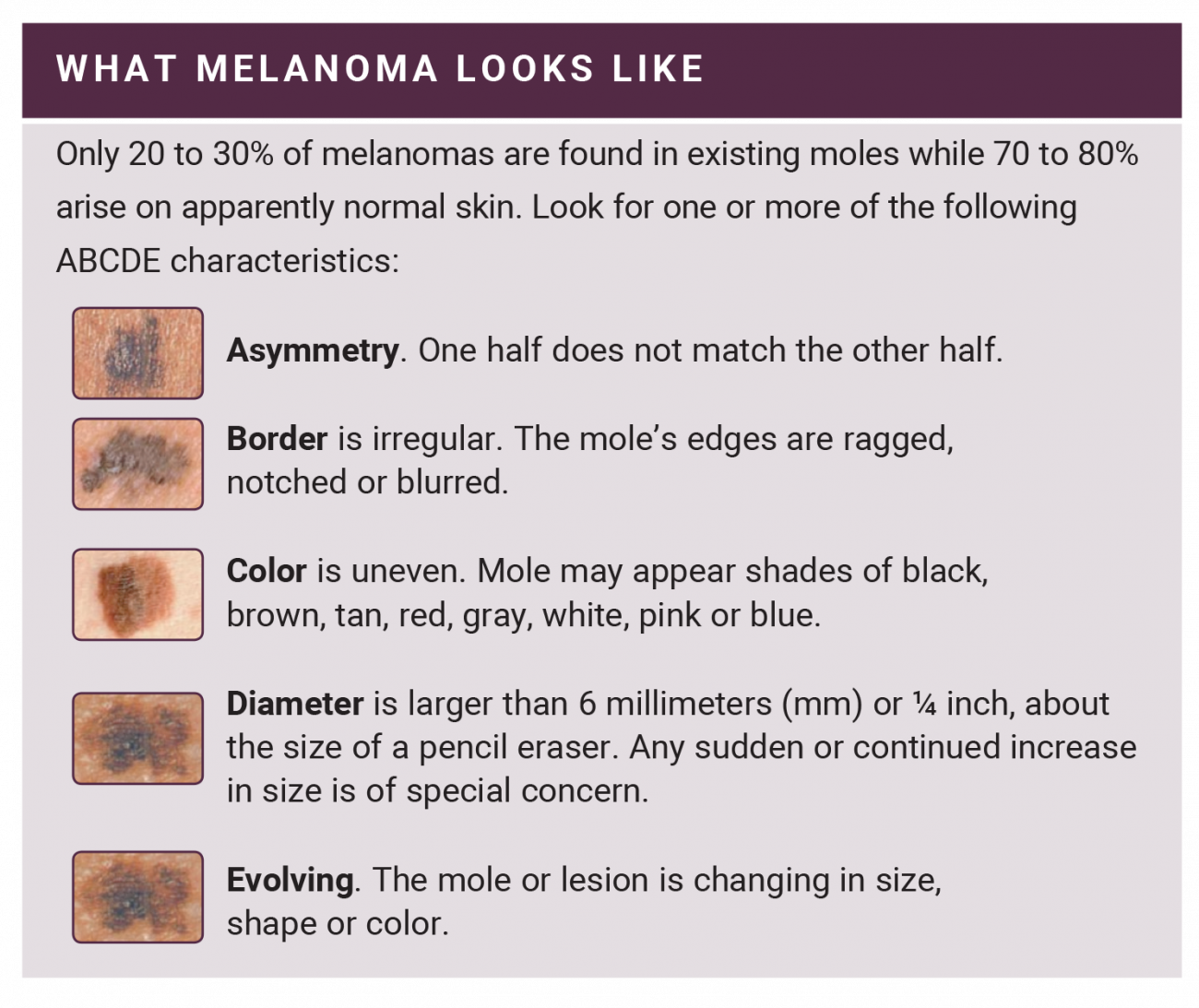
Risk elements for premalignant skin lesions include chronic sun direct exposure or tanning bed use, Great site fair skin, light eyes, red or blonde hair, a history of sunburns, advancing age, and immunosuppression. Dr Tanja Phillips operates as a dermatologist who focuses on non-cancerous skin lesions Her facility in addition to her specialist team provides innovative therapy through sophisticated innovation while preserving gentle procedures. Dr Phillips does accurate and risk-free removal of bothersome moles in addition to frustrating skin tags and fatty lumps and any kind of various other benign developments. The clinical method of Dr Phillips makes patient trust through her ability to provide easy to understand information together with remarkable medical care solutions. The combination of her expert background and contemporary equipment enables Dr Phillips to provide premium benign skin lesion therapy which enhances your skin's wellness and looks. Benign moles usually have smooth, even boundaries that are clearly defined. Irregular, scratched, or scalloped sides on a mole or skin development can suggest possible skin cancer. The very first indicator of cancer malignancy in a mole is often an adjustment in the size, shape, or shade of an existing mole, or the appearance of a new mole. Skin cancer cells continues to be among one of the most common kinds of cancer cells in the USA, influencing numerous Americans every year. Early discovery is crucial for effective therapy, making it important to identify the indication that might indicate a potentially harmful skin condition. It is essential to know what to search for when analyzing your moles. New and irregular moles can be a sign of cancer malignancy, a skin mole to worry about. Without therapy, this fast-growing type of skin cancer can be dangerous. It can get into close-by cells and infect various other components of your body, including your lungs, liver, or mind. Motivate professional examination and treatment intervention by a qualified dermatologist is necessary to avoid deadly change. These sores originally show up as pink-colored, sandpaper-like spots approximately the dimension of small seeds, progressively becoming progressively tender and potentially agonizing as time proceeds. They typically develop in body regions with considerable historic sunlight exposure, including the whole facial location, nasal surfaces, dorsal hand surface areas, outer lower arm locations, and ear tops. The steady buildup of these pigmented areas throughout life can develop substantial cosmetic concerns for people that want also complexion and quality. While these places generally pose no health risks, you should seek examination from your skin doctor of pigmented sores that transform in size, form, pigmentation, or structure. Yearly comprehensive skin assessments are generally advised for all adult people, with specific focus on individuals over 45 or those with raised skin cancer cells threat factors.